CCA scientist recognized for cancer screening research
October 27, 2026

CCA scientist recognized for cancer screening research
October 27, 2026
Story by Dean Parthenis
Five-year study to examine Alberta cancer survivors
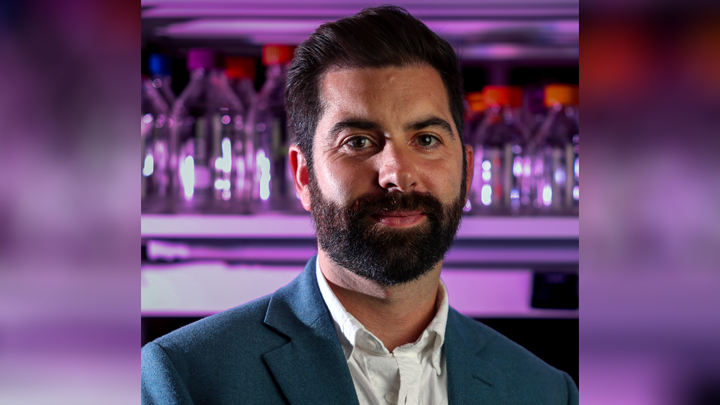
Dr. Dylan O’Sullivan at the Arthur J.E. Child Comprehensive Cancer Centre | Photo by Leah Hennel
CALGARY — Cancer Care Alberta (CCA) researcher Dr. Dylan O'Sullivan is taking on a growing challenge in cancer care: how to better screen the increasing number of people who are living long-term after a cancer diagnosis.
His research examines whether cancer survivors, who face a higher risk of developing a second, unrelated cancer, need screening approaches different from those recommended for the general population. The goal is to develop more personalized screening guidelines and care pathways that could help detect new cancers earlier and improve long-term outcomes for cancer survivors.
This work has earned O’Sullivan a Canadian Cancer Society Emerging Scholar Award, one of just 17 grants funded nationally this year. O’Sullivan is one of four Alberta researchers receiving the award.
The award for O’Sullivan will support a major Alberta-based research program combining health data with interviews involving cancer survivors, primary care physicians and oncologists.
O'Sullivan holds a joint position that bridges clinical research and academia. Based in CCA's Department of Cancer Epidemiology and Prevention Research at the Arthur J.E. Child Comprehensive Cancer Centre, he also serves as an adjunct assistant professor in two separate University of Calgary Departments — Oncology and Community Health Sciences (where the grant application was made). The role allows him to work with clinicians to identify questions that can help optimize cancer care while drawing on academic research expertise.
He is also a member of the Arnie Charbonneau Cancer Institute at the Cumming School of Medicine.
O'Sullivan’s research addresses a challenge made possible, in part, by the success of modern cancer treatment: more people are living longer after a first cancer diagnosis.
With longer lifetimes comes a greater risk of any cancer; however, this is even more true for those who have already survived. Current cancer screening guidelines don't differentiate between those who have had cancer previously, and those who have not.
"There's been a huge shift in cancer patients living long-term after their first diagnosis," O'Sullivan explains. "That’s incredible progress, but it brings a new challenge. Survivors are at higher risk for common, screen-detectable cancers like breast, colorectal, and lung — and right now, they're more likely to be diagnosed at a later, harder-to-treat stage."
Canada's cancer survivor population has doubled over the past two decades to more than 1.5 million people, with that number expected to double again over the next 20 years.
Launching this fall, the five-year project will analyze provincial health data covering roughly 200,000 cancer survivors across Alberta to track who is following current screening guidelines and how those choices impact long-term outcomes.
Importantly, the study isn't just about charts and statistics. O'Sullivan's team will conduct in-depth interviews with survivors, primary care physicians and oncologists to understand the real-world barriers patients face.
"You can look at the data and see that some cancer survivors are not getting screened for colorectal cancer," says O'Sullivan. "But to actually fix the problem, you have to talk to people and figure out why." Reflecting that pragmatic approach, the project team brings together quantitative and qualitative researchers, primary care doctors, oncologists, and patient partners from day one.
The research could also support a personalized risk-prediction tool. Instead of relying on broad population guidelines, family doctors could one day input a survivor’s health history and past treatments to generate a tailored screening plan.
For O'Sullivan, who joined CCA following a PhD at Queen's University and a postdoctoral fellowship in Calgary, the work comes at a critical time. "I’m excited and honoured to receive this long-term investment from the Canadian Cancer Society," O'Sullivan says. “It’s an ambitious project, but I’m confident we have the right team to take it on and conduct this important work, with the ultimate goal of helping cancer survivors live longer and healthier lives.”

